
The Magical Blueprint Component Method: How to Plan a Better Disney World Day
The Component Method
Two families walk into Magic Kingdom on the same Tuesday with the same tickets. One rides eleven attractions, sits down for a real dinner, and watches the fireworks from a spot they picked hours earlier. The other rides six, eats a pretzel standing up, and spends the last hour of the night arguing about whether to get in line for Peter Pan.
The difference is almost never effort. It’s that the second family planned an order, and the first family planned around behavior.
Here’s the whole idea in one sentence: the right time to ride something depends on the attraction, not on where it falls on your list.
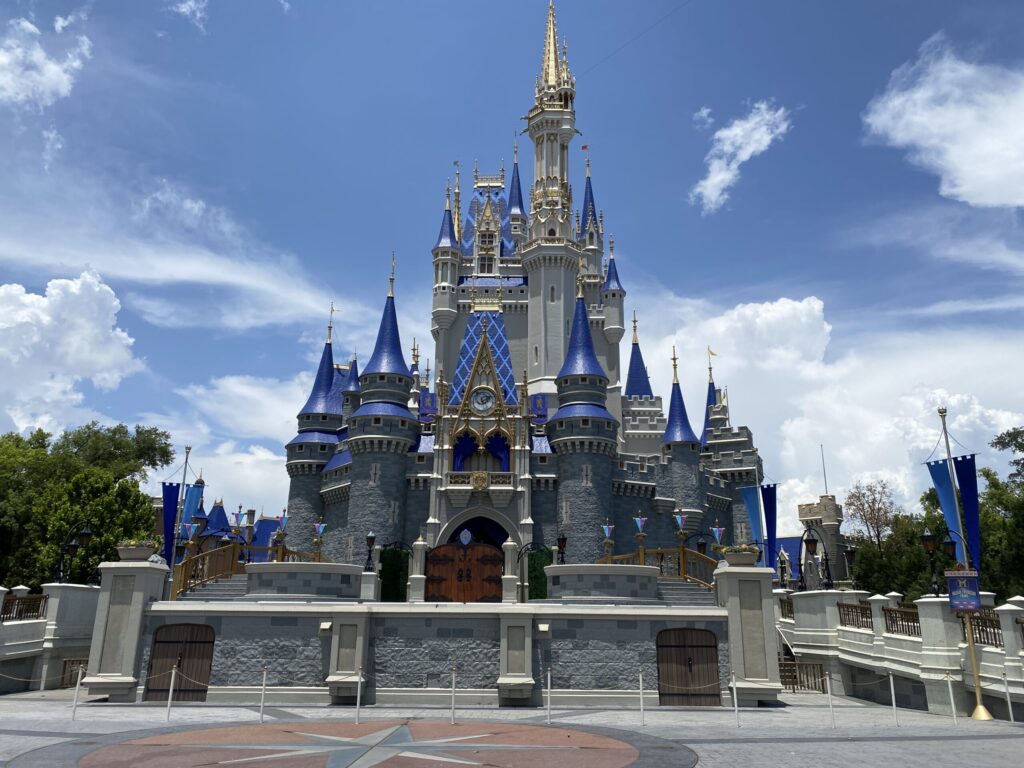
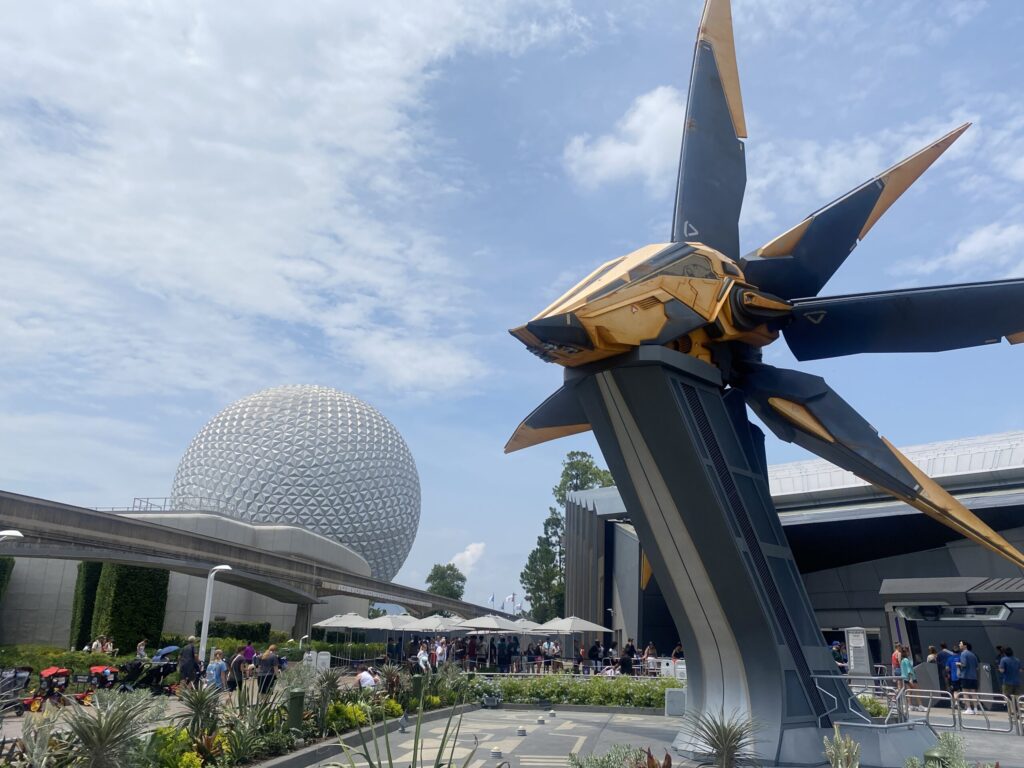
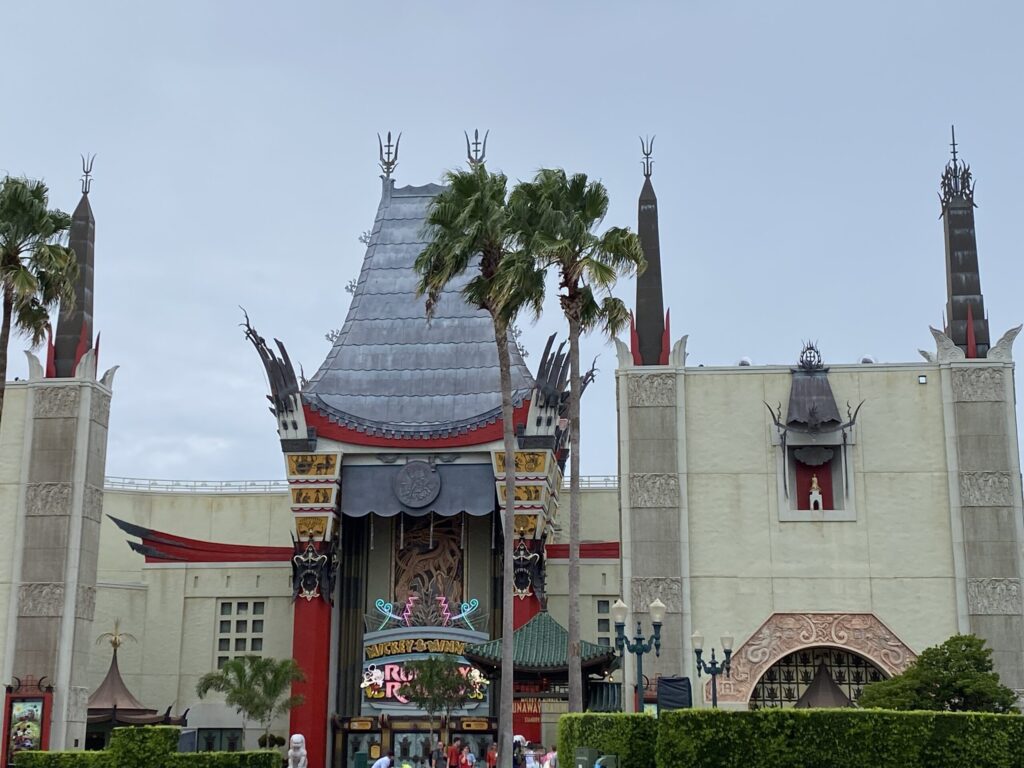
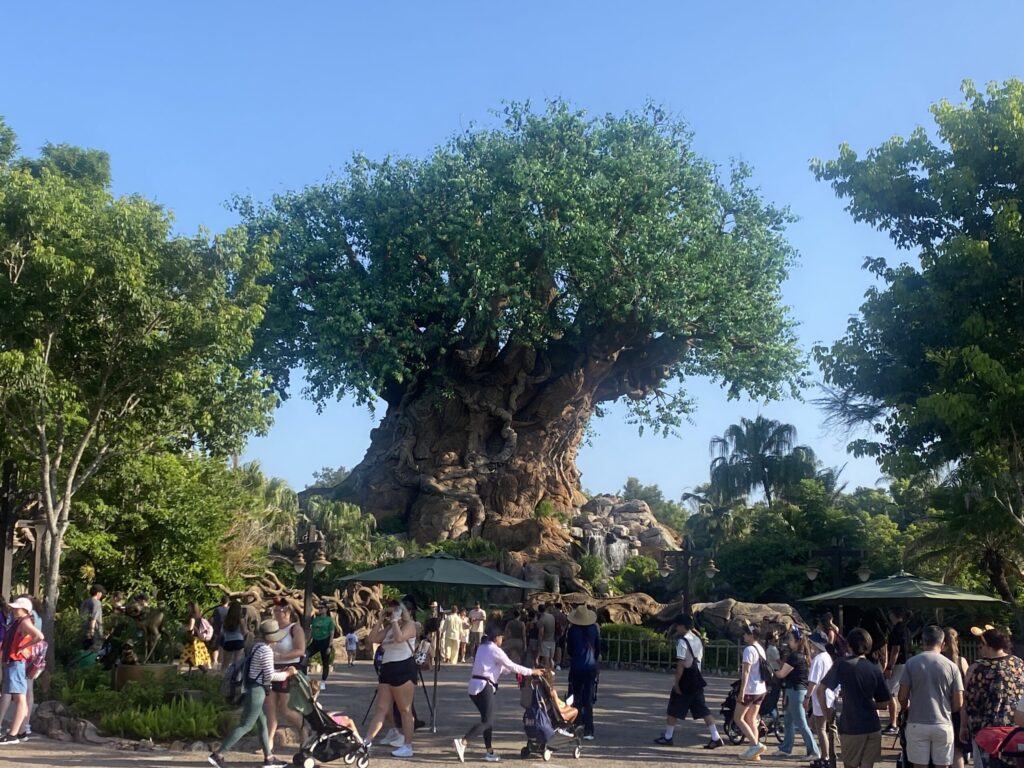
Table of Contents
The Method in One Example
You are standing at the rope for Early Park Entry at Magic Kingdom. You have thirty minutes before the general public walks in. Fantasyland and Tomorrowland are open to you.
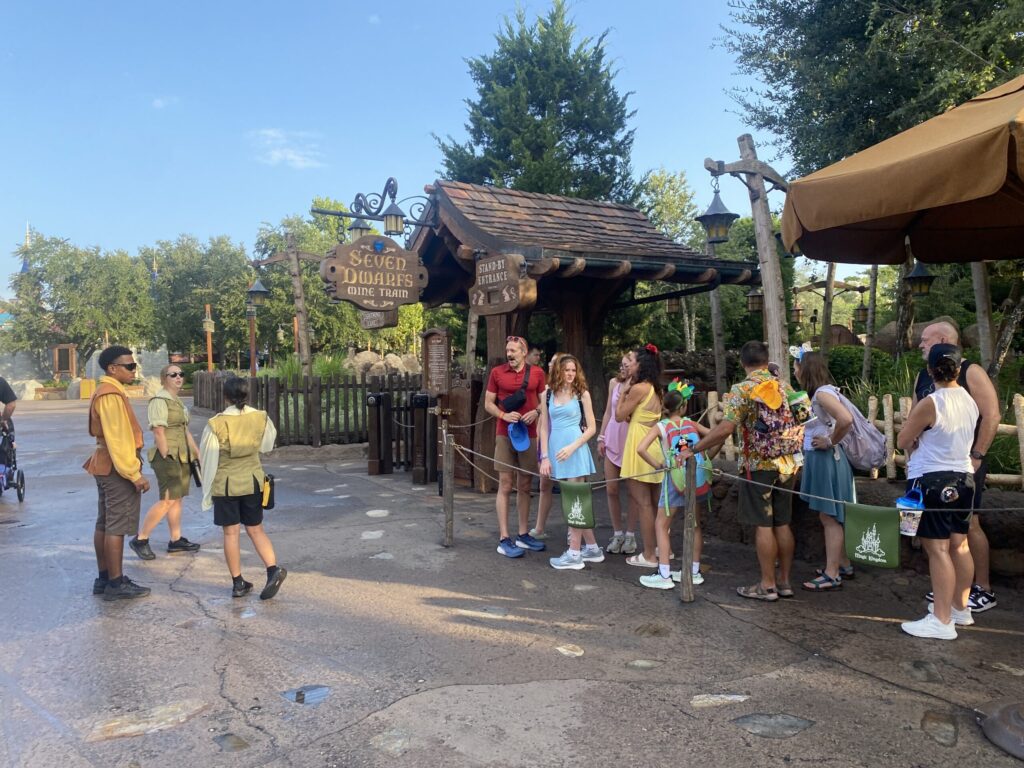
The common choice is Seven Dwarfs Mine Train, because it is the biggest thing you can reach. You get on it. You ride it. You have used your entire head start on one attraction, and when you walk out, the ride is already posting close to what it will post all day.
The Component Method choice is Peter Pan’s Flight, then “it’s a small world,” then The Many Adventures of Winnie the Pooh. Three attractions in the same thirty minutes.
Here is why the second one is better, and it has nothing to do with which rides are more fun.
Seven Dwarfs holds a wait near an hour from late morning until nine at night. Early Entry barely dents it. It is going to be expensive whenever you ride it, so riding it early does not save you anything. It just moves the cost.
Peter Pan is different. It has poor throughput and steady demand, which means it is busy at nine in the morning and busy at eight at night and never has a quiet stretch in between. That thirty-minute window is the only cheap Peter Pan you will get all day. Same for Pooh.
And small world is different again. It moves so many people that it will be near walk-on for most of the afternoon anyway.
So the second family spent their scarce window on the thing they could not get back later. That is the entire method, applied once.
What the Component Method Is Actually Optimizing
One variable: time you don’t need to spend standing in line.
That sounds narrow. It isn’t, because nearly everything people want from a park day sits downstream of it. You cannot ride eleven things if you spend three hours queuing. You cannot keep a six-year-old functional through fireworks if the day burned them down by two in the afternoon. You cannot enjoy a dinner reservation you are too far behind to reach.
So there is no goal to declare before you start. Ride count, protecting a nap, or just getting through a week without a meltdown on Main Street: the same variable serves all of it.
Why I Believe the Component Method Works
A Disney World day isn’t a fixed sequence of attractions. It’s a constantly changing allocation of time.
Wait times rise and fall throughout the day, but they don’t rise and fall equally. Some attractions become dramatically more expensive as the day progresses. Others remain relatively inexpensive. Some have narrow windows when their wait is unusually favorable; others can be saved for almost any time.
The Component Method takes advantage of those differences.
Instead of deciding at 8:00 AM exactly which attraction you’ll ride at 11:00 AM, it identifies which opportunities are valuable when you actually reach 11:00 AM. A short wait on an attraction that stays short isn’t particularly valuable. A short wait on an attraction that is normally expensive may be.
That distinction is the entire point.
The goal isn’t to eliminate every wait. That’s impossible. The goal is to eliminate the waits you didn’t need to take.
We believe this produces a measurable advantage: more attractions completed for the same amount of park time, fewer minutes spent waiting for those attractions, or both.
That’s a hypothesis that can be tested against historical wait-time data rather than a promise based on anecdotal experience.
The Component Method in One Sentence
Use your limited windows of low wait time on attractions that will become more expensive later, and save attractions that remain inexpensive for the parts of the day when waits are highest.
Everything else on this page is an application of that principle.
The Four Categories
Every attraction at Walt Disney World can be classified into one of four primary behavioral categories.
The categories have nothing to do with quality. They describe the relationship between an attraction’s throughput and the demand for it.
1. E-Ticket
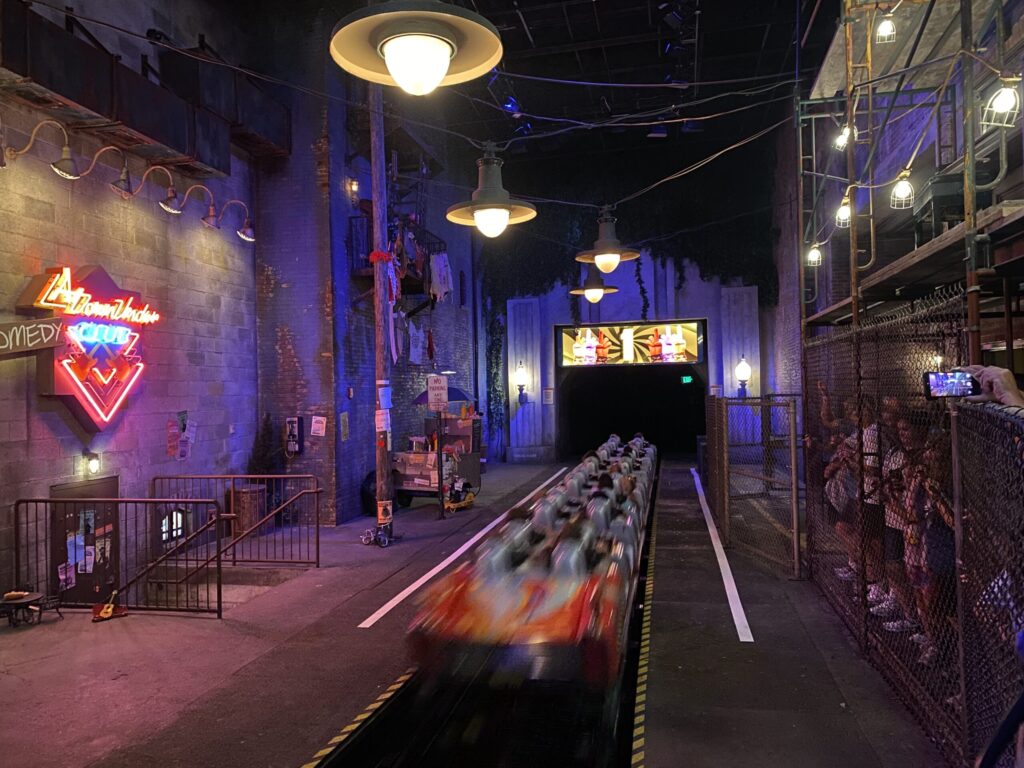
A quick note on the name “E-Ticket”. It comes from the days when Disney parks sold ticket books as part of your park entry. “E-Ticket” was meant to describe the most exciting and anticipated attractions. Disney still uses this phrase colloquially. Magical Blueprint didn’t come up with it.
What it does: Builds fast after opening, stays bad through the early afternoon, eases in the last hour or two.
How to spot it: Long ride time, small vehicles, and a name people knew before they arrived.
What to do: Prioritize Early Park Entry, Lightning Lane, or a late-night window when available. Midday standby is generally the least attractive option.
Example: Big Thunder Mountain posts 20 at 9:15 AM, 45 by noon, and 25 again at 9:30 PM. Same ride, three different prices.
One that surprises people: Jungle Cruise belongs here. It is not thrilling and it is not new. It loads and unloads slowly enough to hold a real line most of the year regardless. Category is about mechanics, not excitement.
2. Perpetual Queue
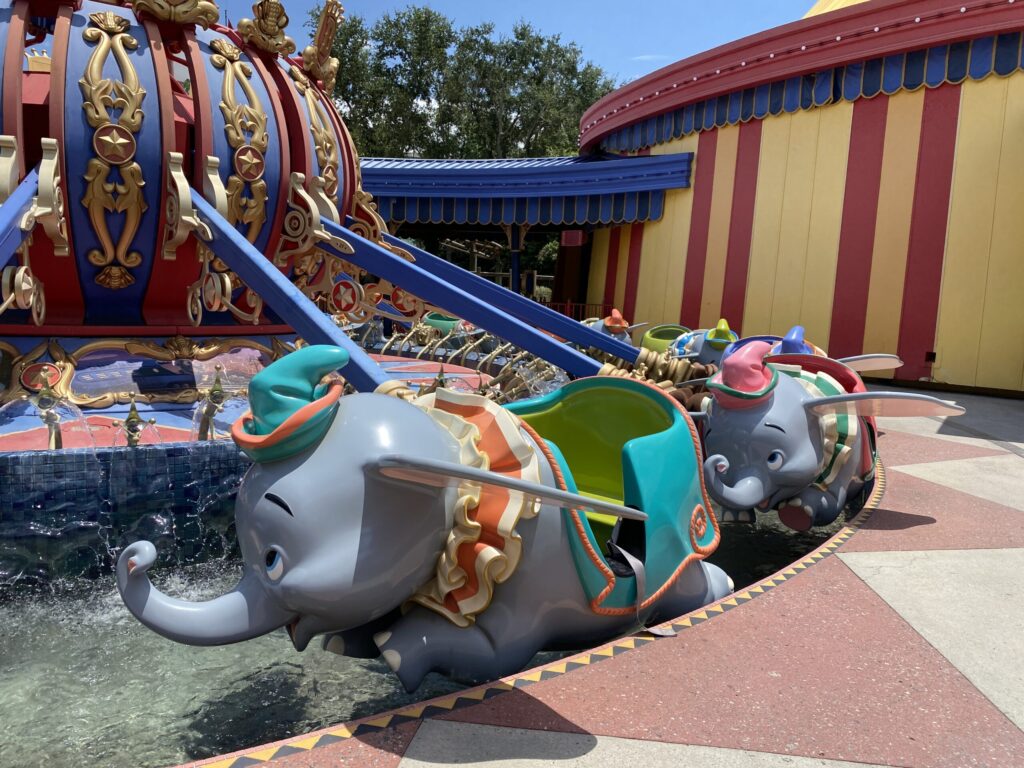
What it does: Stays roughly the same all day. No lull ever arrives.
How to spot it: Short ride, small vehicles, steady but unspectacular popularity. Often something people ride out of nostalgia rather than excitement.
What to do: Use your earliest available access or Lightning Lane when available. Waiting later generally doesn’t improve your position because these attractions don’t develop meaningful low-wait periods.
Example: Peter Pan’s Flight is a three-minute ride with no thrill and no fireworks moment. It still posts 35 to 45 minutes at ten in the morning, at two in the afternoon, and at seven at night.
This is the category that quietly ruins days. These attractions look skippable, so people save them for later. Later never comes.
3. High Capacity
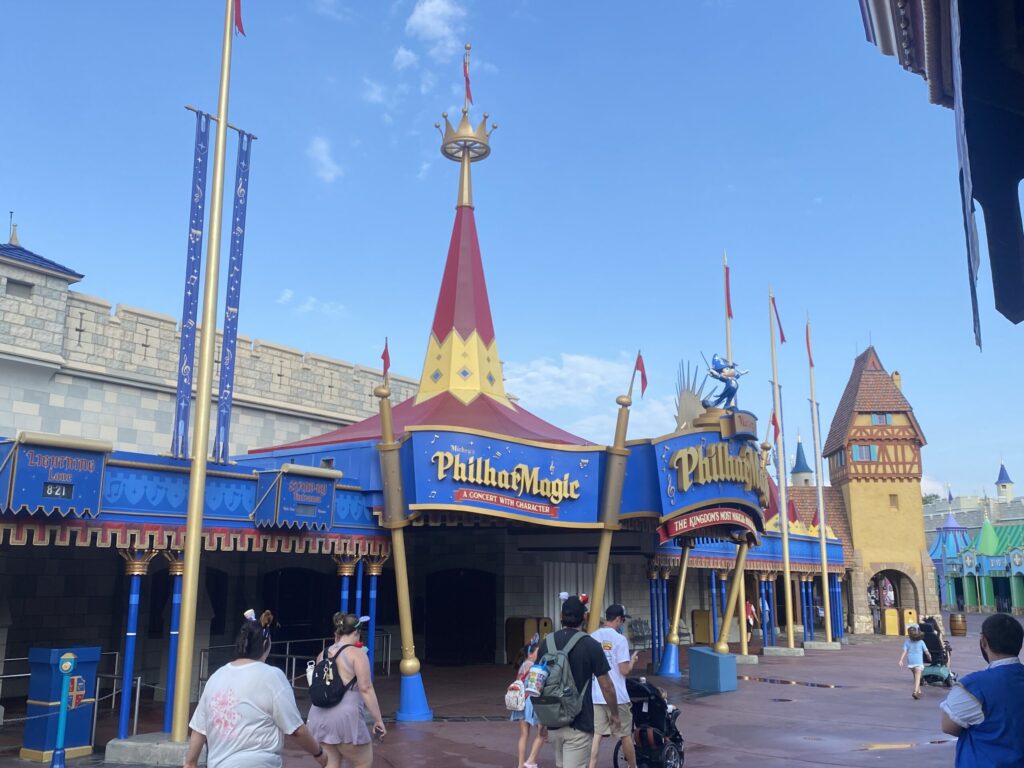
What it does: Wait tends to remain relatively low and stable even as the park gets busier.
How to spot it: A theater that empties and refills its whole audience at once, or a ride that loads continuously without ever stopping.
What to do: Deliberately place these in the worst part of your day. This is the one group where crowd level barely registers, so let it absorb your ugliest hour instead of one of your good ones.
Example: The PeopleMover can have a line stretching down the ramp and still take under ten minutes, because it never stops moving. The Hall of Presidents seats hundreds at once and runs on a fixed cycle, so a “wait” there is just how long until the next show.
4. Low Demand
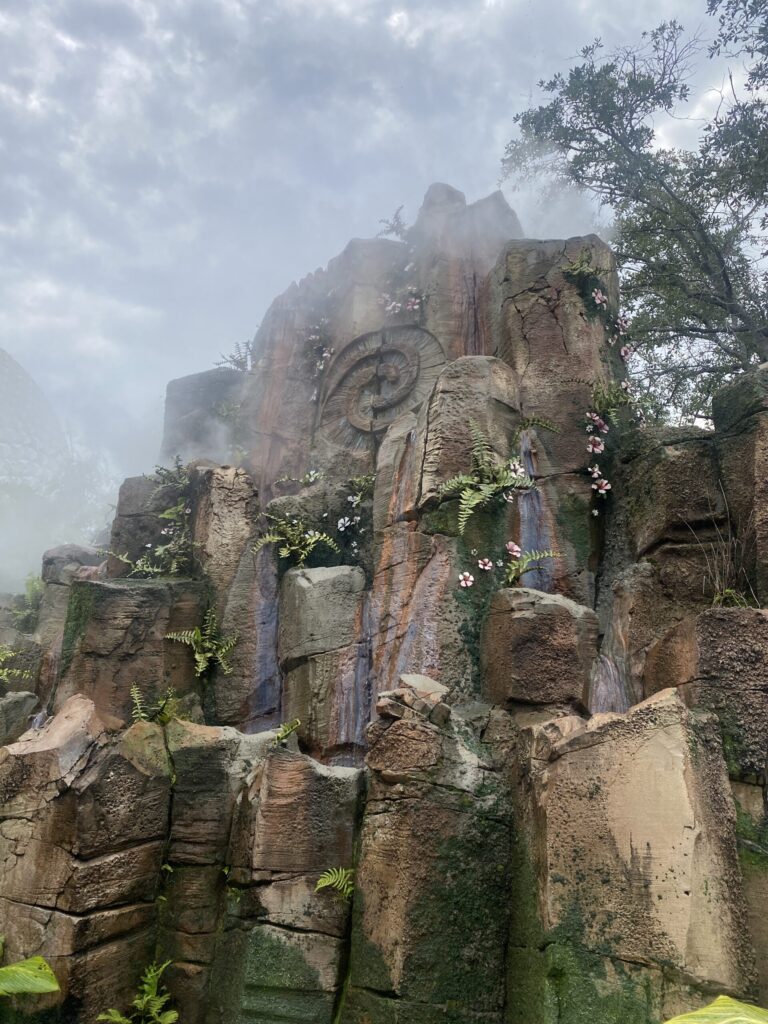
What it does: Short wait because not many people want it.
How to spot it: Older, quieter, or off the main path.
What to do: Use it as filler. Don’t build a critical part of your day around it.
Example: Journey Into Imagination at EPCOT will post 15 minutes and be a walk-on. Good use of a crowded afternoon. But a rainstorm or a nearby closure can spike it without warning, which is why it is filler rather than a plan.
Figuring Out an Attraction You Have Never Ridden
Look at two things together: how long the ride lasts, and how many people fit in a vehicle.
- Long ride, small vehicles, famous name → E-Ticket
- Short ride, small vehicles, steady interest → Perpetual Queue
- Theater that reloads the whole room at once, or a ride that never stops loading → High Capacity
- Anything nobody is talking about → Low Demand
Once you can do that on sight, you can make a good timing call on something brand new that has no data behind it yet.
Reading the Sign
Categories describe a normal day. They tell you which attractions build and release and which stay flat. They cannot tell you what is happening at 4:15 on the specific Tuesday you are standing there.
So the category tells you where to look. Then you watch the numbers.
Worked example. You are in Tomorrowland at 2 PM.
- Buzz Lightyear posts 35. Buzz is High Capacity but genuinely popular, and 2 PM is close to its daily peak. So 35 is roughly normal. Nothing to rearrange your day for.
- Ten minutes later you pass Pirates and it posts 15. Pirates typically runs in the mid-thirties at that hour. Fifteen is a bargain, and bargains on high-demand attractions do not last. Get in line now.
Same afternoon, same park, two very different reads, and the difference came from knowing what normal looks like.
Two things help. Posted waits generally run longer than real ones, and the padding is worst in the first hour of the morning, when the queue is being built rather than measured. And use your eyes. If the line physically ends well short of where a forty-minute queue would reach, believe your eyes over the sign.
The Golden Rule: Never Spend a Low Wait on Something That Is Always Low
A low wait on a high-demand attraction is perishable. A low wait on a low-demand attraction isn’t.
This is the most useful rule in the method, and it replaces the old advice about finishing a land before you move on.
Worked example. You walk into Adventureland at 10:30 AM. The boards look great:
- Enchanted Tiki Room: 5 minutes
- Tiana’s Bayou Adventure (in nearby Frontierland): 20 minutes
- Pirates of the Caribbean: 15 minutes
Everything is short, so it feels like the moment to work through Adventureland in order and knock it all out.
Do not. Tiki Room will be 5 minutes at two in the afternoon and at seven in the evening and at every hour in between. Tiana’s will be 55 by noon. Pirates will be in the thirties.
Ride Tiana’s. Then Pirates. Then leave. Come back for Tiki Room at 1:30 when everything else in the park has gotten expensive.
A low wait on a high-demand attraction is perishable. A low wait on an absorber is not. Spend the perishable one first.
Clearing lands feels efficient. It is how people end up riding the wrong things at the right times.
Building the Day Out of Components
A component is a block of your day rather than a slot on a clock. Blocks can slide. Clock times cannot, which is why traditional itineraries fall apart the first time a ride goes down.
What makes it work is that components have different amounts of give.
Fixed
These components happen at a specific time and can’t simply be moved because you feel like doing something else.
Examples
- Dining reservations
- Parades
- Fireworks
- Scheduled shows
Protect these first. Build the rest of your day around them.
Windowed
These components aren’t tied to one exact time, but their value changes depending on when you experience them.
Examples
- Early Entry
- Lightning Lane return windows
- Attractions with limited operating windows
- Time-sensitive entertainment
Take advantage of favorable windows when they appear.
Floating
These components can move around your day without significantly changing their value.
- High-capacity attractions
- Snacks
- Flexible entertainment
- Resort breaks
Use these components to fill the spaces between your priorities.
A component is a block of your day, not a slot on a clock.
Blocks can move. Clock times can’t.
That’s why the Component Method doesn’t ask you to predict exactly what you’ll be doing at 10:17 AM. It gives you a framework for deciding what belongs in the next block of your day based on the conditions you’re actually experiencing.
Worked example. It is 11 AM and Big Thunder goes down unexpectedly.
If your plan was a list with times next to it, everything behind Big Thunder just shifted and you spend the next twenty minutes rebuilding it in your head while your family waits.
If your plan was components, you had a floating block available: Country Bears is fifty feet away and runs every twenty minutes. You take it now instead of at 1 PM, and your 1 PM slot becomes the new Big Thunder attempt. One component moved. Nothing else changed.
The ratio is what matters. A day made mostly of fixed components is a rigid itinerary wearing a different name. A day with enough floating components absorbs the hit.
Early Park Entry Goes to Whatever You Cannot Get Back
Thirty minutes before the public walks in is the most valuable half hour you get. Most people spend it on the biggest ride they can reach, and that is usually wrong.
The question is not what is most popular. It is what will you never get cheaply again.
Two parks, same rule, opposite answers:
At Magic Kingdom, Early Entry opens Fantasyland and Tomorrowland. Your real choice is one E-Ticket or three Perpetual Queues. Take the Perpetual Queues, because Peter Pan, small world, and Pooh will not be short again at any point in your day. The coaster has other options later.
At Animal Kingdom, it flips completely. Avatar Flight of Passage is the least recoverable attraction on the property. It regularly posts well over an hour by mid-morning and stays there. Nothing else in that park comes close, so it takes the window and nothing competes for it.
I have broken this down for each park in the Early Park Entry series.
Lightning Lane Is an Escape Valve, Not the Engine
The method works without buying anything, and it should, because plenty of people are not spending another few hundred dollars on top of tickets.
But there is an honest weakness in a well-built Component day, and it shows up right in the middle.
Worked example. It is 1 PM at Magic Kingdom. Every E-Ticket in the park is posting 45 or more. The method’s answer is correct and also unglamorous: Hall of Presidents, then the PeopleMover, then Under the Sea, then Mickey’s PhilharMagic. All short, all pleasant, none of them the reason your kid has been talking about this trip for six months.
For some families that is fine. It is air conditioning, it is a sit-down, and it is the most efficient hour of the day. For others, an afternoon of theaters and slow boats is not the vacation they paid for.
That is exactly what Lightning Lane buys. It drops a headliner into the window where the method would otherwise have you doing something calm. It does not make the method work better. It makes the method more tolerable for people who want thrills at one in the afternoon.
So the question is not whether Lightning Lane is worth it in the abstract. It is whether your party would resent that hour without it. If yes, buy it. If no, keep the money. You can price your own trip with the Lightning Lane Cost Calculator.
Two Habits Worth Building
Keep the chain moving. You hold up to three selections at a time and earn a new one as you use them. Disney’s Lightning Lane page describes the trigger as redeeming a selection or letting its arrival window pass. In practice the system also releases a new booking on a timer roughly two hours from your last one. That matters more than it sounds, because a return time at 7:30 PM freezes your chain for hours, while a return time at 10:30 AM restarts it. Sometimes the less exciting attraction is worth more than the better one.
Do not save it only for long lines. Prioritize the headliners first, but you hold the entitlement all day and keep earning bookings after your wish list is done. At EPCOT, Journey Into Imagination, Living with the Land, and The Seas almost always show immediate availability, meaning you book and walk straight in. Skipping a five-minute wait feels pointless once. It compounds, and it is one of the better tools you have for keeping small kids from stacking up toward a meltdown.
Walking is Another Cost
Doing several things in one area is efficient. How much that matters depends entirely on the park.
The Component Method optimizes waiting, but waiting isn’t the only scarce resource in a park.
Worked example. It is 11 AM and a headliner across the park suddenly drops to 25 minutes.
At Magic Kingdom, go. The walk from Frontierland to Tomorrowland is a few minutes and the park is a loop. Chasing a drop is almost always worth it.
At Animal Kingdom, think hard. Pandora to Asia is a real hike in Florida heat, and you are spending fifteen minutes each way plus whatever it costs your group in energy. By the time you arrive the number may have moved. That is why Animal Kingdom gets planned in clusters: you commit to an area before you enter it, and you do not cross that park twice.
EPCOT works as two parks. The front holds the anchors. World Showcase is its own zone and a long walk from the entrance, which makes it the natural home for the busiest part of your afternoon.
Hollywood Studios is compact but puts its two biggest must-dos at opposite ends, which is why anchors matter more there than geography does.
None of this overrides the rule above. Group by area where it saves walking, but never let grouping talk you into riding the wrong thing.
The Four-Step Decision Loop
You don’t need to memorize the entire method. In the park, repeat these four steps:
- Look at what is in front of you. What category is it?
- Compare the posted number to what is normal for that hour. Not to what feels acceptable.
- If it is below normal and the attraction is in real demand, take it now. Whatever your plan said.
- If it is at or above normal, ask whether it gets better. E-Tickets do, late. Perpetual Queues do not. High Capacity was never the problem.
That is the whole loop. Everything above is just explaining why it works.
Where the Method Can’t Help You
The Component Method keeps you out of long lines. It cannot conjure short ones that do not exist.
Seven Dwarfs Mine Train is the clearest example. Its posted wait sits between roughly fifty-five and fifty-nine minutes for about eight hours a day, from late morning through seven in the evening, and it does not meaningfully drop until nine at night. Early Park Entry only brings it to about forty-seven. It is not part of Lightning Lane Multi Pass, so you cannot solve it the way you solve Big Thunder or Jungle Cruise.
That leaves three options and no others. Stand in the queue and accept the cost. Buy a Single Pass on top of what you have already bought. Or skip it.
It sometimes eases late. It often does not. Anyone promising you a trick here is selling something.
When the Method Works Less Well
The method is strongest when wait times vary meaningfully throughout the day. When everything is busy all day, there are fewer favorable windows to exploit.
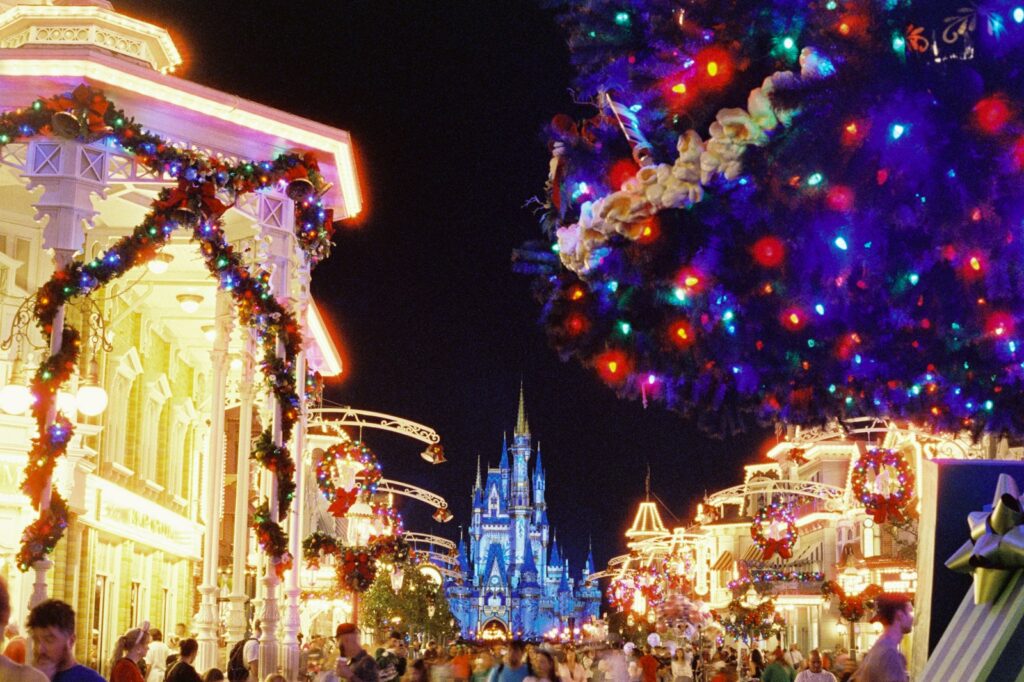
All of this degrades during peak Christmas week. When every attraction holds a long queue from open to close, the volatility the method exploits stops existing, and the best you can do is pick your battles. The rules still point the right direction. They just have less to work with.
The Component Method in Five Rules
- The right time to ride something depends on the attraction, not on your list.
- Spend Early Park Entry on what you cannot get cheaply later, not simply on the biggest ride you can reach.
- Use high-capacity attractions and other flexible components during the worst parts of the day.
- A short line on a popular ride is perishable. Take it when you find it.
- Some waits never become short. Decide whether you’re paying, waiting, or skipping and stop looking for a window that isn’t coming.
The Complete Walt Disney World Attraction Classification
The methodology above explains how to use the categories. This section is the reference guide: every attraction, organized by park and classified according to its typical behavior.
Last reviewed: August 2026.
Jump to park:
Magic Kingdom | EPCOT | Hollywood Studios | Animal Kingdom
Magic Kingdom
The most Perpetual Queues of any park, which is why Early Entry here belongs to Fantasyland rather than to a coaster. Walking cost is low, so this is the park where chasing a wait that just dropped is usually worth it.
Main Street, U.S.A.
| Attraction | Category | Notes |
|---|---|---|
| Walt Disney World Railroad | High Capacity | Large trains, infrequent dispatch. |
| Main Street Vehicles | Low Demand | Nearly everyone walks past them. Morning only, gone once the parade route sets up. 95% of guests skip. |
Adventureland
| Attraction | Category | Notes |
|---|---|---|
| Jungle Cruise | E-Ticket | Slow load and unload gives it a real line most of the year. |
| Pirates of the Caribbean | High Capacity | Loads fast for a boat ride, but everyone has heard of it. Peaks past forty-five and drops under fifteen several times a day. Take one of those windows. |
| Walt Disney’s Enchanted Tiki Room | High Capacity | Theater. Never a wait beyond the next show cycle. |
| The Magic Carpets of Aladdin | Low Demand | Lower demand than Dumbo, but only one carousel. Dumbo got a second in the 2014 expansion, so Magic Carpets can post the longer wait despite wanting it less. |
| Swiss Family Treehouse | Low Demand | Self-paced, no queue. |
Frontierland
| Attraction | Category | Notes |
|---|---|---|
| Big Thunder Mountain Railroad | E-Ticket | Better after dark, which is worth a slightly worse wait. |
| Tiana’s Bayou Adventure | E-Ticket | Demand drops noticeably on cold days. |
| Country Bear Musical Jamboree | High Capacity | Theater. |
Liberty Square
| Attraction | Category | Notes |
|---|---|---|
| Haunted Mansion | High Capacity | Continuous-load omnimover, though the Stretching Room batches the flow. The line moves fast regardless. A posted thirteen means it is a walk-on. |
| The Hall of Presidents | High Capacity | Theater, and the best air conditioning in the park. |
Fantasyland
| Attraction | Category | Notes |
|---|---|---|
| Seven Dwarfs Mine Train | Perpetual Queue with E-Ticket demand | Flat near an hour for most of the day. Single Pass only. See above. |
| Peter Pan’s Flight | Perpetual Queue | The definition of the category. Early Entry target. |
| The Many Adventures of Winnie the Pooh | Perpetual Queue | Early Entry target. |
| “it’s a small world” | High Capacity | Near walk-on most of the day. Occasionally reaches thirty. Do not ride it at thirty. |
| Under the Sea: Journey of The Little Mermaid | High Capacity | Near-permanent walk-on. One of the best things to slot into a crowded afternoon. |
| Mickey’s PhilharMagic | High Capacity | Theater. |
| Dumbo the Flying Elephant | Perpetual Queue | Two carousels since 2014, which materially helps. |
| The Barnstormer | Perpetual Queue | Poor throughput, but low enough demand that it is usually a walk-on. |
| Mad Tea Party | Perpetual Queue | Often behaves like Low Demand. |
| Prince Charming Regal Carrousel | High Capacity | Ninety horses, fast cycle. |
| Enchanted Tales with Belle | Perpetual Queue | Theater format, but small groups and a long cycle mean no full-house reload. Queues like a ride. |
| Casey Jr. Splash ‘N’ Soak Station | Low Demand | No queue. |
| Princess Fairytale Hall | Perpetual Queue | Character meet. |
| Pete’s Silly Sideshow | Perpetual Queue | Character meet. |
Tomorrowland
| Attraction | Category | Notes |
|---|---|---|
| Space Mountain | E-Ticket | Full queue is typically inside – which means you can’t see it to judge real wait time. |
| TRON Lightcycle / Run | E-Ticket | Single Pass only. Meaningfully better at night. |
| Buzz Lightyear’s Space Ranger Spin | High Capacity | Moves people well, but the interactive scoring drives real demand. Holds thirty to forty-five for long stretches. |
| Tomorrowland Transit Authority PeopleMover | High Capacity | Long-looking line, sub-ten-minute reality. |
| Walt Disney’s Carousel of Progress | High Capacity | Theater. Closed since July 2026 for refurbishment, returning 2027. |
| Astro Orbiter | Perpetual Queue | The elevator to the platform makes throughput worse than it looks. |
| Tomorrowland Speedway | Perpetual Queue | Slow loading, though demand has softened. |
| Monsters Inc. Laugh Floor | High Capacity | Theater. |
EPCOT
Effectively two parks. The front half holds the anchors. World Showcase holds two E-Tickets and a long row of absorbers, which makes it the natural home for your worst crowd window.
World Celebration
| Attraction | Category | Notes |
|---|---|---|
| Spaceship Earth | High Capacity | Enormous throughput. Long waits can build in early morning due to being the first attraction people see. |
| Journey Into Imagination With Figment | Low Demand | Can post fifteen. Treat it as the walk-on it will be. Excellent midday filler. |
| Disney & Pixar Short Film Festival | High Capacity | Theater. |
World Discovery
| Attraction | Category | Notes |
|---|---|---|
| Guardians of the Galaxy: Cosmic Rewind | E-Ticket | Single Pass only, not available on Multi Pass. |
| Test Track | E-Ticket | Most downtime on property. Leads to long, slow moving waits. Single rider if you can or Lightning Lane. |
| Mission: SPACE | Low Demand | Fragile on festival weekends. |
World Nature
| Attraction | Category | Notes |
|---|---|---|
| Soarin’ Across America | E-Ticket | Classified on current demand. The new film debuted in 2026, so expect it to drift toward absorber behavior as novelty fades. |
| Living with the Land | High Capacity | Near-permanent immediate Lightning Lane availability. |
| The Seas with Nemo & Friends | High Capacity | Same immediate-availability note. |
| Turtle Talk With Crush | Perpetual Queue | Theater format without a full-house reload. Small house, long cycle, real queues on busy days. |
| Journey of Water, Inspired by Moana | Low Demand | Walkthrough, no queue. |
World Showcase
| Attraction | Category | Notes |
|---|---|---|
| Frozen Ever After | E-Ticket | Low-capacity boats against very high demand. |
| Remy’s Ratatouille Adventure | E-Ticket | Strong Early Entry choice if entering via International Gateway. |
| Gran Fiesta Tour | High Capacity | The line looks worse than it is and moves fast. No Lightning Lane, so standby loads continuously with nothing cutting in. |
| The American Adventure | High Capacity | Theater. |
| Reflections of China | High Capacity | Theater. |
| Impressions de France / Beauty and the Beast Sing-Along | High Capacity | Theater, alternating programming. |
| Canada Far and Wide | High Capacity | Theater. |
| Awesome Planet | High Capacity | Theater. |
| Pavilion character meets | Perpetual Queue |
Hollywood Studios
Compact footprint, the highest sustained waits on property, and two must-dos at opposite ends. Anchors do the work here. Geography does not.
Hollywood Boulevard and Sunset Boulevard
| Attraction | Category | Notes |
|---|---|---|
| Mickey & Minnie’s Runaway Railway | E-Ticket | Strong Lightning Lane choice. |
| The Twilight Zone Tower of Terror | E-Ticket | A posted thirteen means it is a walk-on here too. |
| Rock ‘n’ Roller Coaster Starring The Muppets | E-Ticket | Reopened May 2026. One of the slowest-moving queues on property, with frequent downtime and three lines feeding it. Expect the Lightning Lane itself to run up to thirty minutes. |
| Beauty and the Beast Live on Stage | High Capacity | Theater. |
| Fantasmic! | High Capacity | Fixed showtime makes it a fixed component regardless. Expect to arrive at least one hour prior to showtime. |
| Disney Villains: Unfairly Ever After | High Capacity | Theater. |
Echo Lake
| Attraction | Category | Notes |
|---|---|---|
| Star Tours: The Adventures Continue | High Capacity | Multiple simulators dispatching at once. |
| Indiana Jones Epic Stunt Spectacular | High Capacity | Theater. Has Lightning Lane, don’t waste it on this. |
| For the First Time in Forever: A Frozen Sing-Along | High Capacity | Theater. Also has Lightning Lane. |
Toy Story Land and Galaxy’s Edge
| Attraction | Category | Notes |
|---|---|---|
| Star Wars: Rise of the Resistance | E-Ticket | Single Pass only. Highest-priority anchor in the park. |
| Slinky Dog Dash | E-Ticket | Long outdoor queue. |
| Millennium Falcon: Smugglers Run | E-Ticket | The single rider line changes the math considerably. |
| Toy Story Mania | E-Ticket | Has real lulls that drop it near walk-on. Worth watching for. |
| Alien Swirling Saucers | Perpetual Queue |
Walt Disney Studios
| Attraction | Category | Notes |
|---|---|---|
| Walt Disney Presents | Low Demand | Walkthrough plus theater. |
| The Little Mermaid: A Musical Adventure | High Capacity | Theater. |
| Disney Jr. Mickey Mouse Clubhouse Live! | High Capacity | Theater. |
The Magic of Disney Animation opens in September 2026 and will be classified once it has run a season. MuppetVision 3D and Star Wars Launch Bay are permanently closed.
Animal Kingdom
The highest walking cost of the four parks, and the one where clusters stop being a preference. Commit to an area before you enter it. This is also the park where time of day changes the attraction itself, not just the line.
Discovery Island and Pandora
| Attraction | Category | Notes |
|---|---|---|
| Avatar Flight of Passage | E-Ticket | Single Pass only. The least recoverable attraction at Walt Disney World, which is why Early Entry belongs to it. |
| Na’vi River Journey | Perpetual Queue | Continuous boats, but throughput is genuinely poor against demand. It does not get short. |
| Zootopia: Better Zoogether! | High Capacity | Theater. Elevated demand since opening, but the format absorbs it. |
| Adventurers Outpost | Perpetual Queue | The fastest Mickey and Minnie meet on property. Fifteen minutes is a good wait here, not a bad one. No Lightning Lane. |
| Discovery Island Trails | Low Demand | Animal activity varies with time of day and heat. |
| Wilderness Explorers | Low Demand | Walkaround activity throughout the park. |
Africa
| Attraction | Category | Notes |
|---|---|---|
| Kilimanjaro Safaris | E-Ticket | The strongest case on property for letting time of day override wait time. Animal activity peaks early, and it closes well before the park does. |
| Gorilla Falls Exploration Trail | Low Demand | Same animal-activity consideration. |
| Festival of the Lion King | High Capacity | Theater. |
| Wildlife Express Train | High Capacity | The only access to Conservation Station. |
| Bluey’s Wild World | Perpetual Queue | An interactive show experience, not a meet and greet. Expect to wait through roughly one cycle. |
| Jumping Junction | Low Demand | Australian animal viewing, in the former Affection Section space. |
Asia and Theater in the Wild
| Attraction | Category | Notes |
|---|---|---|
| Expedition Everest | E-Ticket | The single rider line changes the math considerably. |
| Kali River Rapids | E-Ticket | Demand tracks the temperature. Cheap in cool weather, brutal in August. Closes seasonally. |
| Maharajah Jungle Trek | Low Demand | Walk through animal trail. |
| Feathered Friends in Flight | High Capacity | Theater. |
| Finding Nemo: The Big Blue and Beyond | High Capacity | Theater. |
DINOSAUR and DinoLand U.S.A. closed in February 2026 for the Tropical Americas expansion, expected 2027.
Two Exceptions That Override the Classification
Character meets are always Perpetual Queue. No exceptions anywhere on property. A meet moves one party at a time through a fixed photo setup, which caps throughput no matter how the line is designed. If a meet matters to your group, treat it with the same urgency as Peter Pan’s Flight.
Fixed showtimes override category. Parades, fireworks, and nighttime spectaculars have a category and it does not matter. A 3 PM parade is a fixed component whether or not the venue absorbs crowds, and the rest of the day builds around it.
See the Method in Action
If you want the method start to finish across a single day, I walked through a full Magic Kingdom day using it. If you would rather build your own from scratch, the Disney World Itinerary Planner is the place to start.
Can You Think Like a Component Planner?
You’ve learned the framework. Now see whether you can use it.
Use the Component Method in the Park
Standing at an attraction right now? Enter the attraction, its posted wait, and the time of day. The tool will compare what you’re seeing to that attraction’s normal behavior and give you a Component Method verdict.
Verdict
Frequently Asked Questions
What is the Component Method?
It is a system for planning a Walt Disney World day around how attractions behave rather than around a fixed order. Every attraction is sorted into one of four categories based on how quickly it moves people through compared to how many people want on it. You then build the day out of movable blocks and time each attraction by its category.
Does the Component Method require buying Lightning Lane?
No. The method works entirely on standby. Lightning Lane changes what is possible in the middle of the day, when the highest-demand attractions are at their worst, by letting you drop a headliner into a window that would otherwise hold quieter attractions. Whether that is worth the cost depends on whether your party would resent a calmer afternoon.
What should I ride during Early Park Entry?
Whatever you cannot get cheaply later. At Magic Kingdom that usually means the Fantasyland attractions with poor throughput, since those never get short again. At Animal Kingdom it means Avatar Flight of Passage, because nothing else recovers it. The rule is about recoverability rather than popularity.
How do I avoid long lines at Disney World?
Learn which attractions build and release across a day and which stay flat, then spend your low-wait opportunities on the ones that fluctuate. Place theaters and continuous-load rides deliberately into the busiest part of the afternoon. Never get into a short line for something that is short all day when something in higher demand is also briefly short.
Can the Component Method get me a short wait for Seven Dwarfs Mine Train?
No. Seven Dwarfs holds a wait near an hour for about eight hours a day and does not meaningfully drop until nine at night. It is not available on Lightning Lane Multi Pass. Your options are to stand in the standby queue, buy a Single Pass, or skip it.
Does a posted wait time mean the actual wait?
Posted times generally run longer than real ones, and the gap is widest in the first hour after opening, when the queue is being built rather than measured. At Haunted Mansion and Tower of Terror, a posted thirteen-minute wait is the signal that the attraction is a walk-on.
Is the Component Method just another Disney itinerary?
No. A traditional itinerary tells you what to do and when to do it. The Component Method gives you a framework for deciding what to do next based on how attractions are behaving when you get there. You prepare before the trip, but you retain flexibility inside the park.
Does the Component Method mean I should ignore geography?
No. Walking is a cost, and the method accounts for it. Group attractions geographically when doing so saves meaningful time or energy. But don’t let the desire to “finish a land” cause you to pass up a valuable wait-time opportunity elsewhere.
Disclosures and Disclaimers
Magical Blueprint LLC is not affiliated with, endorsed by, or sponsored by The Walt Disney Company or any of its subsidiaries or affiliates. Disney, Walt Disney World Resort, Magic Kingdom, EPCOT, Disney’s Hollywood Studios, Disney’s Animal Kingdom, Lightning Lane, and all related attraction names, characters, and properties referenced on this page are trademarks of and copyrighted by The Walt Disney Company or its affiliates. All references are made for the purposes of identification, commentary, and editorial reporting only.
Wait time figures cited on this page are drawn from publicly available historical tracking data and represent typical behavior, not guarantees. Attraction categories describe how attractions usually behave and will not hold on every date. Menus, pricing, hours, attraction lineups, and policies are subject to change at any time without notice. Verify current details on Disney’s official website before making plans.
All opinions expressed here are my own. I have received no compensation from The Walt Disney Company or any other party in exchange for the content of this page.